Mini Roundabouts Explained: A Simple Guide for Learner Drivers
Mini roundabouts are a common feature on UK roads, especially in residential areas and town centres. While they might look simple at first glance, many learner drivers find dealing with them confusing when they first encounter them. The good news is that once you understand the rules and how to approach them correctly, mini roundabouts become straightforward and even helpful for managing traffic flow.
In this guide, we’ll break down exactly what mini roundabouts are, how to use them safely, and the most common mistakes to avoid during your driving test and everyday driving.
What is a mini roundabout?
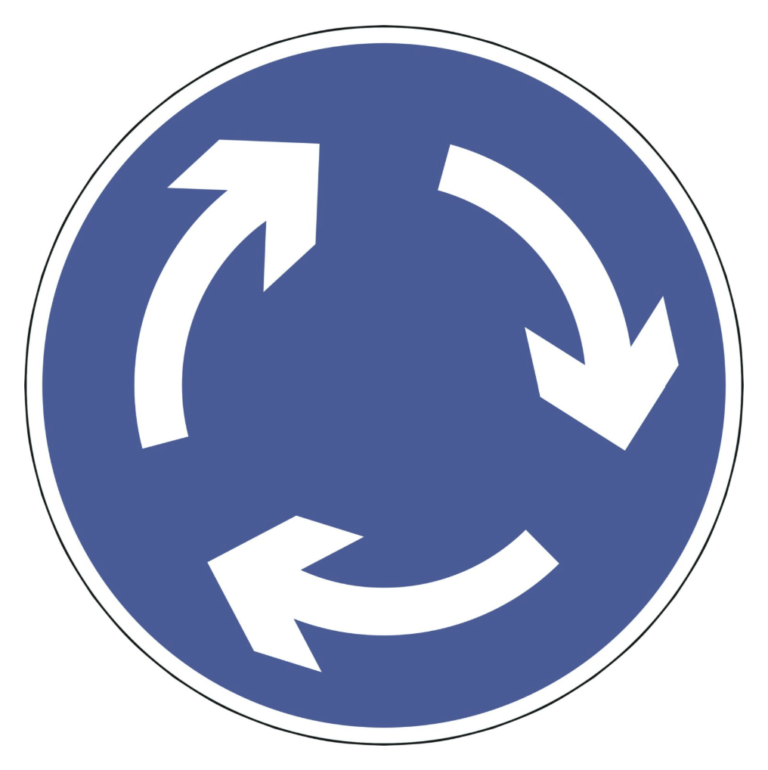
A mini roundabout is a small circular junction, usually marked with a white painted circle in the centre of the road instead of a raised island. They are designed to slow traffic and improve flow at junctions where a traditional roundabout would take up too much space.
You’ll often find them:
In housing estates
On busy residential roads
At small crossroads in towns
Near schools or shopping areas
Despite their size, the same basic roundabout rules apply.
The basic rules of mini roundabouts
Understanding priority is key.
1. Give way to traffic from the right
When approaching a mini roundabout, you must give way to vehicles coming from your right.
If a vehicle is already on the roundabout, they have priority over you.
2. Treat it like a normal roundabout
Even though it’s small, you should still:
Signal your intentions
Position correctly
Check mirrors and blind spots
Maintain proper lane discipline where possible
3. Don’t cut across the centre circle
It is an offence to drive over the painted centre unless your vehicle is too large to avoid it. Even then, it should only be done if absolutely necessary.
How to approach a mini roundabout (step-by-step)
Step 1: Observe early
As you approach:
Check for road signs and markings
Scan for vehicles already at or on the roundabout
Adjust your speed early
Step 2: Position correctly
Your position depends on your exit:
Turning left: keep left
Going straight ahead: stay in your lane (usually left unless road markings say otherwise)
Turning right: position to the right-hand side of the approach road
Step 3: Apply the mirror–signal–manoeuvre routine
Check mirrors
Signal in good time
Adjust speed and prepare to stop if needed
Step 4: Give way if necessary
Stop if:
A vehicle is approaching from the right and will reach the roundabout first
The junction is blocked
It is unsafe to proceed
Step 5: Proceed with confidence
Once clear:
Move off smoothly
Maintain awareness of other road users
Complete your exit with correct signalling
Common mistakes learner drivers make
 Not checking the right properly
Many learners focus only ahead. At mini roundabouts, the right is your most important check.
Approaching too fast
Speeding up to the junction reduces your ability to react. Always slow down early.
Forgetting to signal
Signals are essential, especially when turning right or changing direction.
Confusion over who has priority
Remember: traffic already on the roundabout or approaching from the right has priority over you.
 Driving straight over the centre
Unless your vehicle physically cannot avoid it, this is incorrect and can result in a driving fault.
Tips for driving test success
If you’re preparing for your driving test, examiners will be looking for:
Good observation skills
Correct use of mirrors and signals
Smooth and controlled braking
Safe judgement of gaps in traffic
Confidence without rushing
Mini roundabouts are often used by examiners to assess how well you understand priorities and decision-making under pressure.
Final thoughts
Mini roundabouts may seem intimidating at first, but they are actually designed to make junctions safer and more efficient. Once you understand the rules—especially giving way to the right and approaching at the correct speed—they become one of the easiest parts of urban driving.
With practice, you’ll start to read them instinctively and handle them with confidence, both during your test and in everyday driving. Book your manual driving lessons or automatic driving lessons with Fast Pass Driving School and our expert instructors will guide you through dealing with mini roundabouts like a pro. Contact us today to book your first driving lesson.